What Actually Happens in Your Body During Distant Healing?
Have you ever wondered what really goes on when a healer sends 'energy' to you from the other side of the country? Distant healing has become a popular path to relief and wellbeing – and now we're diving into the science behind this fascinating practice.
The Mystery of Distance Treatment
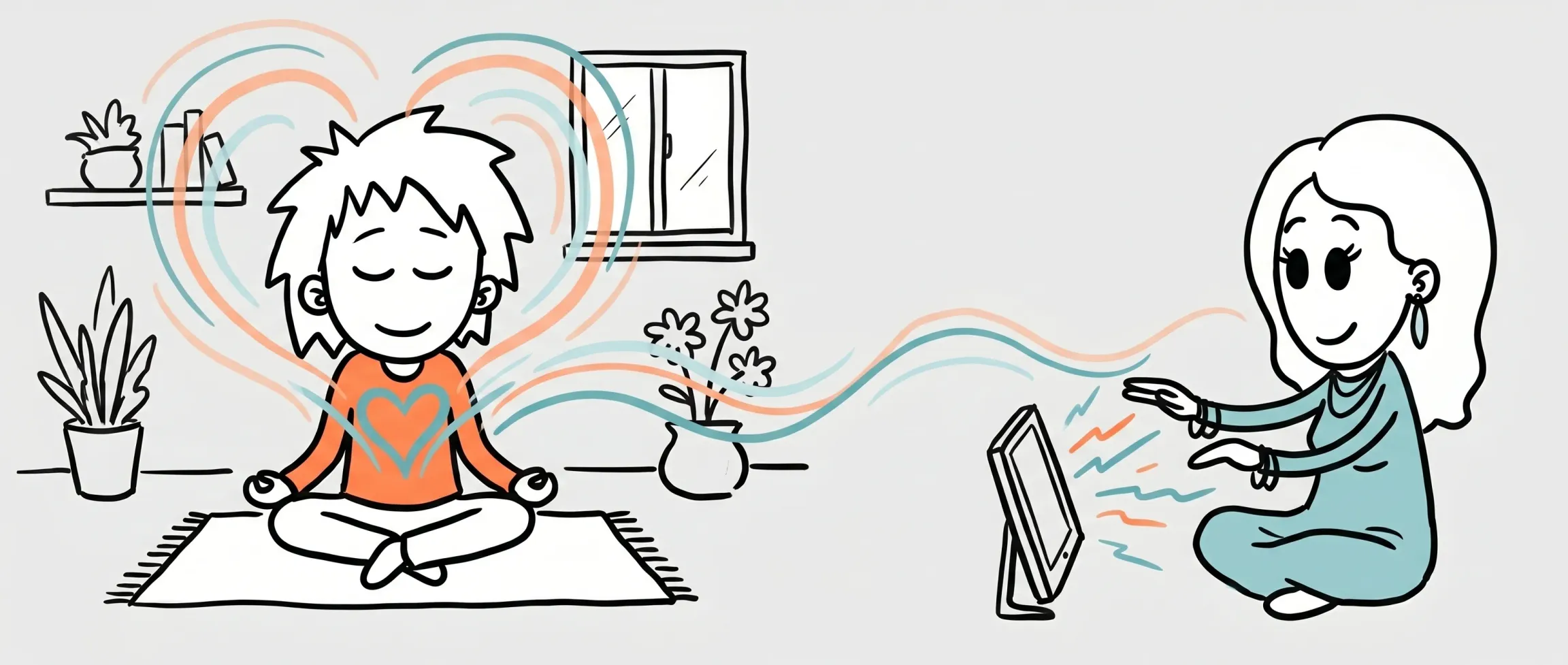
Distant healing is a form of treatment where the healer works at a distance through visualization, meditation and energy work. What makes it particularly interesting is that you can sit at home on your own sofa while the healer focuses their attention on your wellbeing from a completely different place.
Many report experiences such as warmth, deep relaxation or emotional release during or after sessions. But what actually happens in the body when we believe we are receiving healing at a distance?
When Expectation Becomes Physical Change
What's exciting about distant healing doesn't necessarily involve mysterious energy transfer – but rather the body's own fantastic ability for self-healing through what we call the placebo effect.
When you expect to feel better, the brain sets a series of processes in motion. Your prefrontal cortex begins to modulate pain perception before treatment has even begun. It's as if the body prepares to get well – just because you believe it will happen.
The Body's Own Pharmacy is Activated
During the placebo effect, the brain releases several powerful substances:
- Endorphins: The body's natural painkillers
- Dopamine: Improves mood and gives a feeling of wellbeing
- Lower cortisol: The stress hormone drops, which helps the body recover
These changes are measurable and real – even if the cause may not be what you think.
Science's View on Distant Healing
Research on distant healing has given mixed results. A large systematic review from 2000 analyzed 23 studies with a total of 2,774 patients. The results showed that 57% of studies found positive effects, but researchers concluded that methodological limitations made it difficult to draw definitive conclusions.
A more comprehensive review from 2015 found that although some experimental effects had been observed, the evidence was not yet strong enough to give confidence in the clinical effect. This doesn't mean distant healing is ineffective – it just means we need to be honest about what's happening.
What Works Best?
Interestingly, research shows that distant healing appears to have greater effect on people who are unwell than on healthy control subjects. This suggests that motivation and need play a role in how well the treatment works.
Studies have also shown that the quality of the relationship between healer and client is crucial for the outcome. The more trust and positive expectations present, the better the treatment works.
The Danish Tradition for Healing
In Denmark we have a long tradition of alternative treatment. Around half of Norwegian hospitals and a third of Danish hospitals now offer complementary treatment. This shows that even the established healthcare system recognizes the value of holistic approaches.
Our Nordic ancestors also knew about distant healing through spiritual practices like seiðr – a form of healing and supernatural warfare. Wise folk or 'wise women' used magical formulas and rituals to heal at a distance.
Precautions and Reality Check
While distant healing can be a valuable support for your wellbeing, it's important to be realistic about its limitations:
What distant healing CAN do:
- Reduce stress and anxiety
- Promote relaxation and emotional wellbeing
- Supplement conventional treatment
- Provide a sense of hope and control
What distant healing CANNOT do:
- Cure cancer or other serious diseases
- Replace medical treatment
- Guarantee healing
It is crucial never to replace medical treatment with distant healing alone, especially for serious health problems.
The Positive Spiral
If you experience positive effects from distant healing, it can create a beneficial spiral. When you feel better, you become more optimistic, which can further improve your health. The social support from the healer can also contribute to the feeling of being seen and helped.
Some people also find that the ritual of 'receiving' distant healing – setting aside time for themselves and focusing on healing – has therapeutic value in itself.
How to Get the Most Out of Distant Healing
Before the session:
- Choose a healer you feel comfortable with
- Create a calm environment at home
- Have realistic expectations
During the session:
- Relax and be open to the experience
- Focus on positive thoughts about healing
- Allow yourself to notice
After the session:
- Reflect on your experiences
- Continue with healthy lifestyle
- Use the experience as motivation for self-care
The Future for Distant Healing
Although the scientific world still discusses the mechanisms behind distant healing, there's no doubt that many people experience real improvements. Research on the placebo effect and mind-body connection continues to reveal how powerfully our beliefs and expectations can affect our physical health.
The important thing is not necessarily to prove that energy travels through space, but to understand how the healing process works – regardless of mechanism. When we understand that, we can use this knowledge to strengthen our own health and wellbeing.
Conclusion: It's About You
Distant healing may not work the way many think – but that doesn't mean it doesn't work at all. Your belief in the treatment, your relationship with the healer, and your willingness to invest in your own wellbeing all play a role in the outcome.
What happens in your body during distant healing is a fascinating mixture of psychology, neurobiology and your own innate ability for self-healing. And that may be more impressive than any mysterious energy transfer could be.
Remember: Distant healing is best when it supplements – not replaces – conventional medical treatment. Your body has incredible self-healing powers, and sometimes it just needs a little help to remember that.