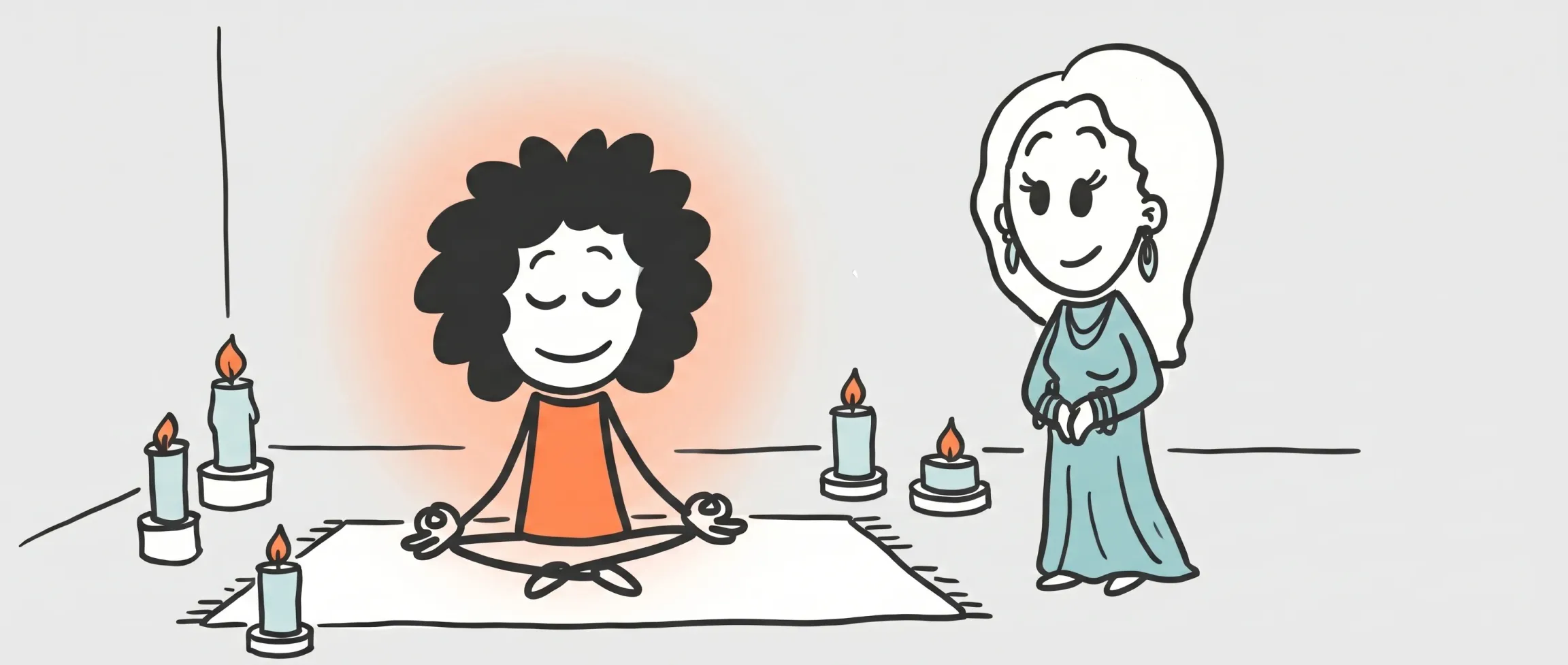
Why do I feel restless after meditation? How your journey toward inner peace begins
It's Monday morning, and you've decided to try meditation for the first time. You sit on a cushion, close your eyes and wait for the inner peace everyone talks about. Instead of calm, you experience unrest, racing thoughts and a strange feeling of restlessness. You think: "Am I doing something wrong?"
Spoiler alert: You're doing it completely right. Feeling restless, sleepy or even frustrated during meditation isn't just normal – it's actually a sign that you've begun an important inward journey.
What actually happens in your body when you meditate?
When you sit down to meditate, something fascinating happens in your body and brain. When people meditate, we can see that there are changes in the brain, that their stress response changes, that blood pressure drops, and that they become more relaxed. But that's just the tip of the iceberg.
Research shows that meditation probably causes changes in the fundamentals of your brain - namely in the brainstem. You can actually measure that the brain's neurotransmitters change during meditation. What's interesting is that meditation activates the reptilian brain, our reward center, and that it reduces the stress response.
Norwegian researchers in 2014 used brain scans to investigate how the brain reacts when you meditate. The researchers could confirm that meditation in the 14 test subjects activates the areas of the brain that process thoughts and emotions.
But here comes the interesting part: The brain doesn't react as violently to discomfort when activity in the amygdala is low, as it is during meditation. This also means that you experience pain as less painful.
Why can meditation feel like "getting stuck" the first time?
Let's be honest: Most of us expect meditation to be like an instant calm-pill. But reality is more nuanced. Meditation is not a miracle cure. It's a practice that works over time. Some feel calm immediately. For others it takes weeks or months before something begins to loosen up.
It can actually be quite confusing when you experience more racing thoughts than usual. But many experience that they think more than they usually do while standing still. But you don't think more than you usually do. You're just more aware.
Think of it like turning on the light in a dusty room – suddenly you can see all the dust that was always there, but that you didn't notice before.
What can daily meditation actually do for you?
Less stress and better sleep
Meditation calms your body, gives you a better sense of it and helps you curb thoughts, unrest and stress – and therefore optimizes the conditions for a good night's sleep. If you have problems sleeping at night, a daily meditation practice before bedtime can therefore be a really good remedy to overcome this.
Stronger immune system
Meditation's positive influence on your mood, stress level and hormones makes your immune system more robust. Your general resistance to infections increases, and the risk of inflammatory conditions decreases.
Better concentration and memory
A study from 2019 in Behavioural Brain Research suggests that a short daily meditation (12 minutes) over a period can reduce stress, regulate emotions, improve mood and memory. Many people find out that they think more clearly after having meditated. This happens because meditation trains the brain to focus on the present moment. It's as if the brain gets exercise through meditation, which helps you concentrate better in other parts of your life.
How do you start the right way?
Start small and be patient
Start slowly: Begin with short sessions of 5 to 10 minutes a day. This helps you get used to the practice without feeling overwhelmed. Routine is more crucial than intensity. Meditation works through repetition – not through perfection.
Find your own style
There are many different traditions and schools within meditation – both religious and commercial – but Troels W. Kjær doesn't believe that any are better than others. When you meditate, the most important thing is that you are fully occupied with the exercises, whether they involve visualizing an image, controlling your breathing or repeating a sentence over and over again.
Use aids
Guided meditations – Use apps like Insight Timer, Calm or Danish Simple Habits, where you get support from a voice that guides you through the practice. Insight Timer is an absolutely fantastic app and I use it myself every day. No other mindfulness apps offer a better timer and so much free material.
When do you start to notice a difference?
Brand new studies have shown that meditation can increase our attention and dampen stress-related symptoms already within five days. But as with all training, the real results come with regularity.
Peter Vestergaard-Poulsen compares the development in the two areas with the effect you see when you strength train your upper arm. The first three to four months you won't see a change in the arm despite the hard work. But suddenly the muscle begins to grow. It's figuratively the same thing we think happens during meditation.
The most important thing to remember
There is no "right" way to meditate. If you feel restless, sleepy or frustrated, that's completely okay. The most important thing is that you stay. With yourself. Without judgment. This is where meditation begins to work.
So next time you sit on your meditation cushion and feel the restlessness, remember: You're not failing – you're waking up to what has always been there. And that's actually the beginning of something quite beautiful.