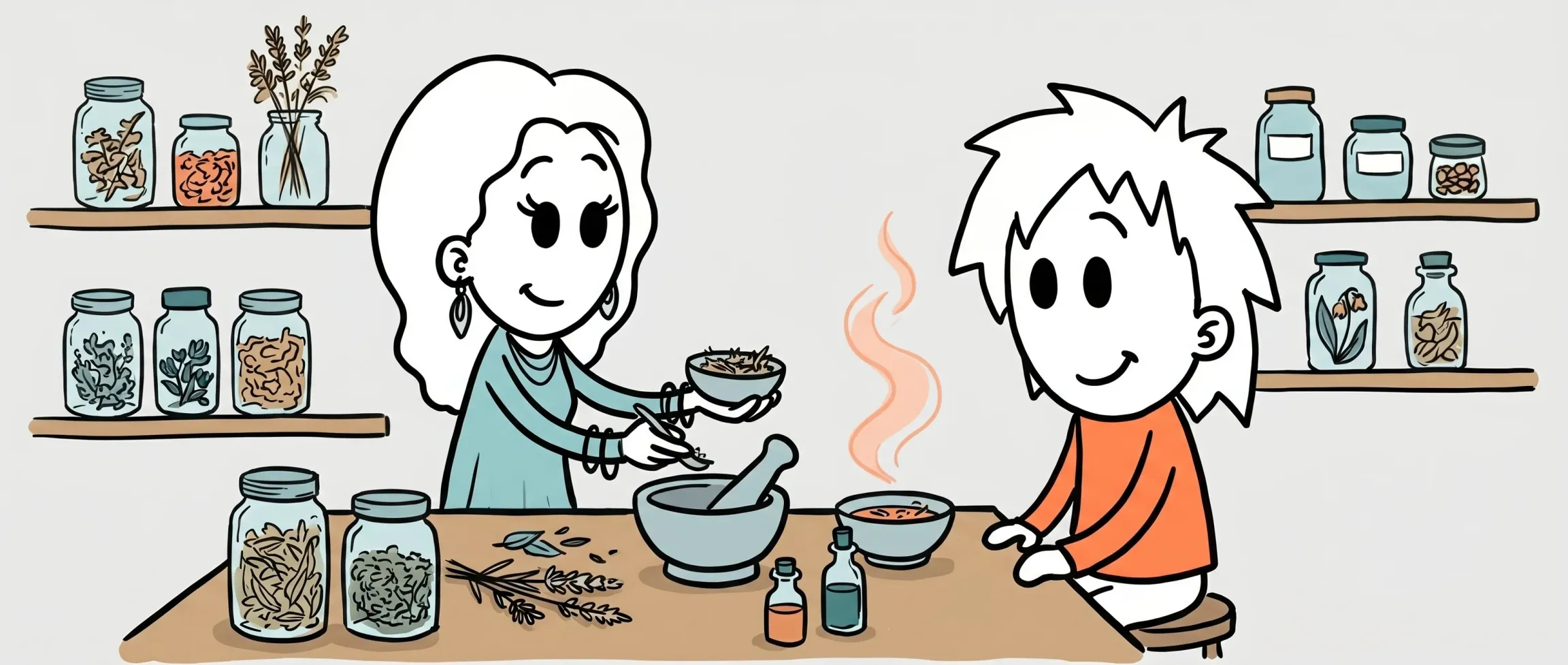
Why Danes Choose Nature's Pharmacy Over Chemistry
Something special has happened in Danish homes in recent years. In both kitchen cupboards and medicine cabinets, more and more natural solutions are popping up. Where we previously went on autopilot down to the pharmacy for headache pills and sleeping medication, more and more people are turning their gaze towards plants.
I have personally witnessed this change through my daily contact with people seeking alternatives to synthetic medicine. They don't just come because they've been scared away by side effects – although that certainly happens too. They come because they have discovered something fundamentally different about working with the body on nature's terms.
It's About More Than Symptom Treatment
Where herbal therapy stands out is in the approach to healing. Instead of attacking a single symptom, the herbal therapist looks at the whole picture. When you come with sleep problems, we don't just look at what can make you sleep – we investigate why your body cannot find rest.
This holistic approach hits the mark with many Danes who are tired of jumping from specialist to specialist. "It's as if no one looks at me as a whole person," I often hear. That's exactly what herbal therapy does.
Plants Work Together
One of the fascinating aspects of herbal therapy is how plants can be mixed to create synergistic effects. Where synthetic medicine typically contains one active ingredient, a single herb contains hundreds of bioactive compounds.
Take for example lemon balm, which both has a calming effect on the nervous system and improves sleep quality. Combined with valerian, you don't just get two effects added together – you get an amplification, where one supplements the other. Studies actually show that the combination of lemon balm and valerian works just as effectively as prescription sleep medication, but without the next-day side effects.
Stress and Sleep – Our Biggest Challenges
According to the Danish Health Authority, over every third adult Dane sleeps less than the recommended seven hours per night. And when we lack sleep, the immune system is weakened, making us more susceptible to infections and increasing the risk of cardiovascular disease.
This is where nature's toolkit comes into its own. Chamomile, which is mild and without side effects, helps us relax in the same way as sedative medication. A Japanese study showed that chamomile extract helped mice fall asleep just as quickly as those given benzodiazepine.
The Immune System Gets Natural Backup
In this time when we constantly worry about getting sick, it's worth knowing that research has shown how echinacea can reduce the risk of catching a cold by up to 17 percent. In people with stress and weakened immune systems, the effect was even greater – here the probability of illness was halved.
"But does it also work on my symptoms?" people often ask. Yes, it does. The same studies showed that complications such as pneumonia and middle ear infections were less frequent in those who used echinacea.
From Tradition to Science
What has happened over the past decades is that ancient herbal wisdom has been supported by modern research. We now know exactly how plants' active substances work in the body.
Research shows that herbs contain different groups of bioactive substances: alkaloids that affect the nervous system, flavonoids that function as powerful antioxidants, tannins with antibacterial effect, and saponins with immunomodulating properties.
Production Methods That Make the Difference
An interesting aspect of modern herbal therapy is how different production methods affect the effect. A 1:2 extract, produced by percolation, is 2.5 times stronger than a traditional 1:5 tincture. This means more effect per drop – and fewer side effects.
By measuring the content of active substances before and after production, we can document that the right techniques extract far more bioactive compounds than traditional methods.
Safety and Interaction
One of the most important things to understand about herbal therapy is that "natural" doesn't automatically mean "harmless." Although natural medicine generally has fewer side effects than synthetic medicine, interactions can still occur.
St. John's wort is a classic example. It can affect the effect of birth control pills, immunosuppressive medicine, and antidepressants by increasing the breakdown of these substances in the body. This is why it's so important to work with a qualified herbal therapist who knows about these connections.
What Can You Expect?
When you start herbal therapy, the first consultation is typically 1-1½ hours long. You fill out a thorough questionnaire beforehand, and the therapist creates an individual treatment plan based on your specific needs.
After 1-3 months, there's follow-up where you together evaluate the results and possibly adjust the treatment. It's this personal approach and ongoing adjustment that often makes the difference.
An Investment in Your Health
For many, the transition to herbal therapy is not just a treatment – it's a lifestyle change. It's about getting to know your body better, understanding the connection between diet, stress, and well-being, and taking responsibility for your own health.
And the results speak for themselves. When the body gets the right nutrients and support through plants, its natural ability to heal itself is activated. It's a gentle but effective path to better health.
Always remember to consult your doctor if you feel ill, and inform both doctor and herbal therapist about all medicine and supplements you take. Herbal therapy is a supplement to – not a replacement for – regular medical treatment.