What happens in your body during your first visit to a naturopath
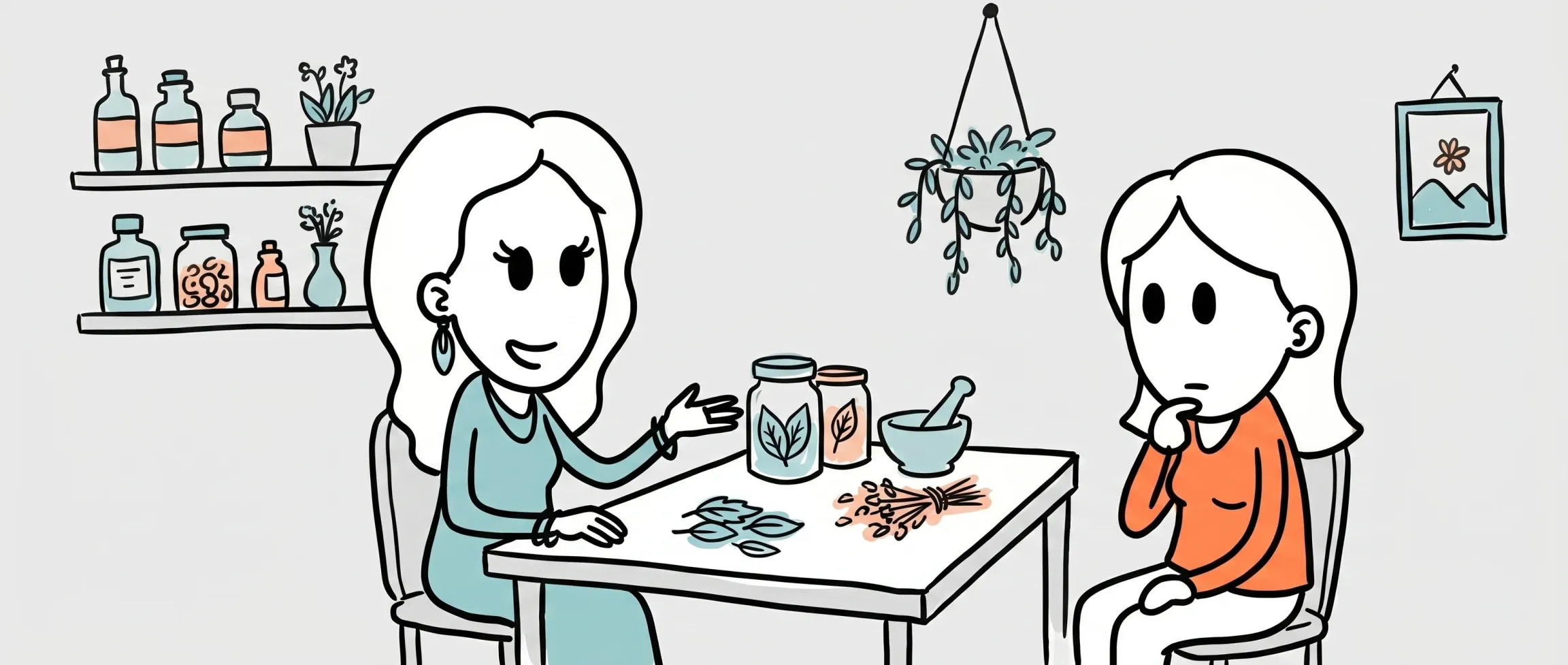
You're sitting in the waiting room at a naturopath's office for the first time. Your heart might be beating a little extra because you don't quite know what you're walking into. Could it really be true that dietary changes and herbs can help with problems that conventional medicine hasn't been able to solve? Let's take a journey through your first visit and discover what actually happens in the body when the naturopath's holistic approach meets your unique health.
What is a naturopath really?
A naturopath is a health practitioner who specializes in natural medicine and sees your health as an interplay between body, mind, and environment. In Denmark, naturopaths work especially with nutritional therapy, herbal medicine, lifestyle counseling, and the body's natural healing processes. The protected titles "biopath" and "naturopath ibm" (in biological medicine) require thorough education of 3-5 years, where practitioners learn about anatomy, physiology, pharmacology, and pathology.
The difference between a naturopath and your general practitioner is the approach: Where the doctor often focuses on treating specific symptoms, the naturopath looks at what created the imbalance in the first place. It's about finding the root causes of the problems – not just suppressing the symptoms.
Your first consultation: A detective at work
Taking your history
The first thing that happens during your visit is a comprehensive conversation – often called history taking. Here the naturopath will ask about much more than just your current symptoms. Expect questions about:
- Your medical history all the way back to childhood
- Your family's health history
- What you eat on a typical day
- Sleep patterns and energy levels
- Stress levels and emotional challenges
- Previous treatments and medications
- Work environment and lifestyle habits
This can feel intense the first time because the naturopath really wants to understand you as a whole person, not just the problem you came with. They're looking for patterns and connections that can give clues about what has brought your body out of balance.
Physical examination
Many naturopaths will also perform a physical examination. This may include:
- Observation of skin, eyes, tongue, and nails
- Palpation (touching) of the abdomen to assess the digestive system
- Simple tests of reflexes and muscle function
- In some cases kinesiology, where muscle strength is used to "communicate" with the body
These examinations give the naturopath insight into how different organ systems function and interact.
What happens in the body during the conversation?
Stress and the nervous system
Although you might feel relaxed during the conversation, a lot is actually happening in your body. Just talking about health problems activates your nervous system. When you tell about symptoms or concerns, the brain releases signaling substances that affect your stress level.
A skilled naturopath will be aware of these reactions. They might notice that you tense up when certain topics come up, or that your breathing changes. This gives them valuable information about which areas require special attention.
The immune system's reaction
Something interesting also happens with your immune system during a thorough conversation about your health. When you reflect on your lifestyle and symptoms, the brain begins to form new connections between different factors. This awareness can actually activate the body's natural healing processes.
The analysis phase: Pieces of the puzzle
After the thorough conversation, the naturopath goes into analysis mode. They look at all the information you've given and search for patterns. They might discover connections between:
- Stress at work and digestive problems
- Dietary habits and lack of energy
- Sleep problems and mood swings
- Environmental factors and allergy-like symptoms
This holistic approach means that your treatment plan becomes tailored specifically to you. What works for your friend with seemingly the same problems doesn't necessarily work for you.
The treatment plan: The body's way back to balance
Nutritional therapy
The most common form of treatment is nutritional therapy. The naturopath will guide you in which foods support your body's healing processes and which might possibly worsen the problems. This is not "one-size-fits-all" dietary advice, but individual guidance based on your specific situation.
Herbal medicine and supplements
Based on your body's needs, the naturopath may suggest specific herbs, vitamins, or minerals. These natural substances work to:
- Strengthen organs that are under pressure
- Restore nutrients the body lacks
- Support detoxification processes
- Regulate hormones and neurotransmitters
Lifestyle changes
Naturopaths will often suggest changes in your daily life: better sleep hygiene, stress management, exercise adapted to your energy, and environmental improvements. These adjustments help the body achieve better balance.
What can you expect after your first visit?
The first weeks
The body typically begins to respond to naturopathic treatment within the first few weeks. You may experience:
- Changes in energy levels (often an improvement)
- Improved sleep quality
- Better digestion
- Less inflammation and pain
Most importantly, be patient. Natural medicine works to restore balance, not just suppress symptoms, so it takes time.
Follow-up and adjustment
Most naturopaths will want to see you again after 4-6 weeks to assess progress and adjust the treatment plan. Your body is constantly changing, and treatment must be adapted to these changes.
Is there science behind it?
A Danish study from 2021 compared nature-based therapy with cognitive behavioral therapy for stress treatment and found that both treatment forms had "statistically equally effective" results, even 12 months later. This indicates that holistic approaches like naturopathy can be a valuable supplement to conventional treatment.
However, it's important to remember that research in natural medicine can be challenging since treatment is so individualized. As researchers at NAFKAM (National Research Center for Complementary and Alternative Medicine) point out, it is "generally difficult to research possible effects of treatment composed of many parts."
Safety and expectations
A serious naturopath will always:
- Recommend you continue with any medical treatment
- Refer to a doctor if they discover serious symptoms
- Be open about what they can and cannot help with
- Adjust treatment if you don't experience improvements
Remember that naturopathy is not a quick fix, but an investment in your long-term health. It's about giving the body the tools it needs to heal itself.
Conclusion: A partnership with your body
Your first visit to a naturopath is the beginning of a partnership – not just with the practitioner, but with your own body. By understanding the connections that affect your health, you get tools to take responsibility for your own health in a new way.
Remember that the body's natural healing processes take time, but with patience and the right tools, you can experience improvements that extend far beyond just making symptoms disappear. Your first visit is the first step on the path to a healthier and more balanced existence.