What actually happens in the body during spiritual healing?
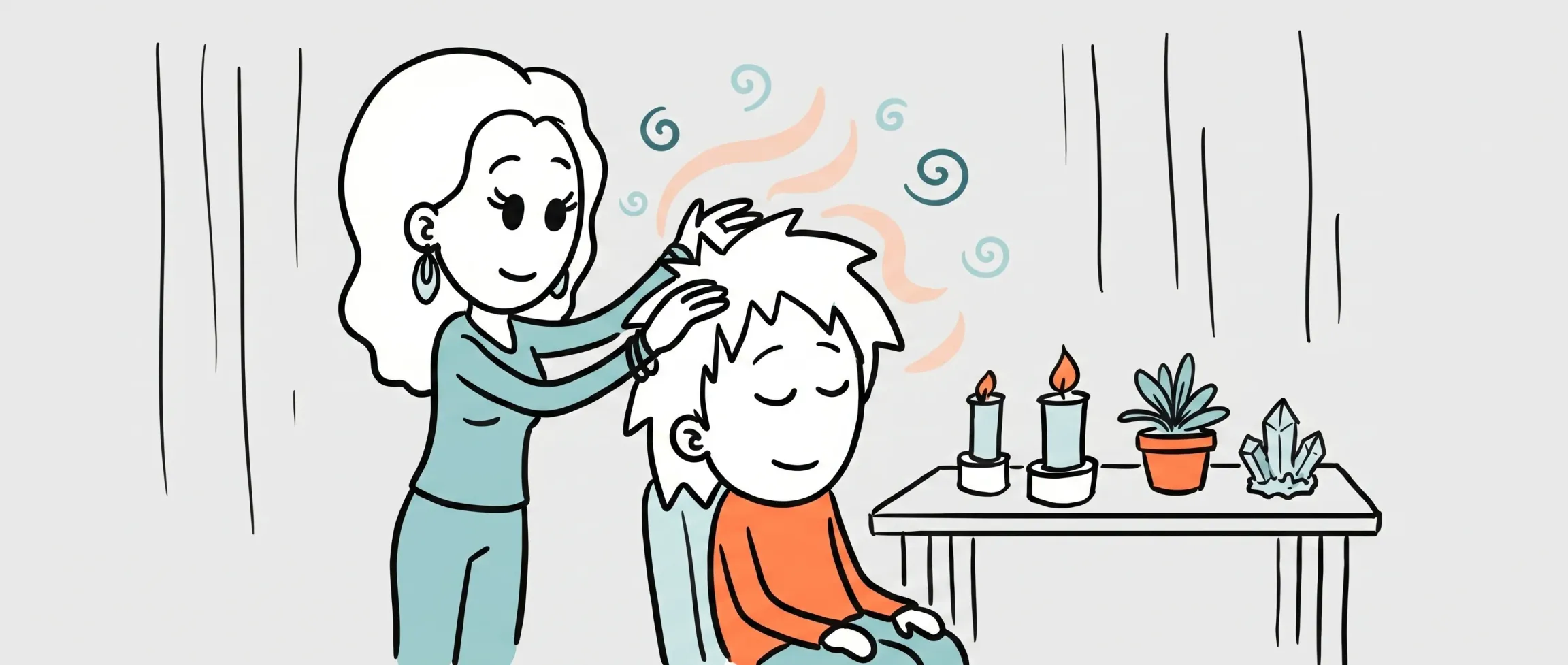
Lie gently on the table, lower your shoulders and close your eyes. The practitioner places warm hands over your head, and slowly a deep calm settles over you. But what is actually happening in your body when you receive spiritual healing? Although spiritual energy work is surrounded by mystique, science is actually beginning to see what happens on the biological level.
Spiritual healing is [a holistic approach that works with the connection between body, mind and soul]. This form of treatment aims to promote physical, emotional or mental balance through energy work, meditation, prayer and spiritual practices. But when we strip away the mystical, what can we actually measure?
Your body reacts physically to healing energy
What's interesting about spiritual healing is that the body actually responds measurably to the treatment - even when no "real" medicine is given. Healing often creates a relaxed state that can activate the body's parasympathetic nervous system, also known as the "rest and digest" system, which can help reduce symptoms of stress and anxiety.
According to a meta-analysis from 2017, Reiki healing is better than placebo at activating the parasympathetic nervous system - measured by lowered pulse and blood pressure, and increased heart rate variation. This means that your body can actually be measured to relax more deeply during treatment.
But more happens than just relaxation. With hands-on healing, touch can trigger the release of hormones like oxytocin, which can improve emotional well-being. It's the same "love and trust hormone" that's released when we hug or care for others.
The placebo effect plays a bigger role than you think
Let's be honest: A large part of healing's effect is about the placebo effect. But that's not necessarily bad! If you take a fake painkiller, it actually reduces pain-related activity in the brain and spinal cord and causes the release of natural painkillers in the brain called endorphins - the same painkillers that opioid medication is designed to mimic.
What's fascinating is that so-called "honest placebos" - where the patient knows it's placebo - still work for conditions like irritable bowel syndrome, headaches and hyperactivity disorder. This is probably due to things like just being in a treatment course and the feeling of being helped.
In many cultures, healing is performed through rituals with trusted figures - from clinical doctors to religious leaders. The strong belief in treatment, medically, spiritually and socially, allows for an increase in symptoms. Although these benefits are subjective, they can have real psychological and social impacts for a person or group, like a placebo.
Meditation and mindfulness: Healing's scientific foundation
Some of the most convincing evidence for spiritual healing actually comes from research on meditation and mindfulness. There is very good documentation that mindfulness reduces stress and anxiety, and that it reduces symptoms like chronic pain and fatigue - both in healthy people and in people with depression or serious illness.
New research even shows that meditation can produce subjective mystical experiences, improvements in mental health and can change neural, immune, autonomic gene expression, proteomic and metabolomic activity. It's pretty wild to think that meditation can literally change how your genes express themselves!
Research has shown that spiritual practices like meditation, prayer and mindfulness can have positive effects on stress levels, immune system, mental health and quality of life. There is growing recognition that spirituality can have an influence on our well-being and health.
What does research say about healing in general?
Five research reviews have examined different forms of healing (energy healing, spiritual healing, reiki, healing touch and therapeutic touch) against different types of pain. Common to these is that the studies examined showed that healing had an effect on pain, but the researchers also emphasize that more and better research is needed to confirm these results.
It's important to understand that according to NAFKAM, it is not known whether healing can have an effect on the health conditions that are suggested. The National Center for Complementary and Integrative Health concludes likewise - there is no clear evidence that Reiki has healing effects.
But that doesn't mean healing is worthless! Patients who have tried alternative treatment methods report improved quality of life as well as reduction of anxiety, restlessness and similar. This is shown by population studies that NAFKAM has conducted.
When the body heals itself
The beautiful thing about spiritual healing is perhaps precisely that it reminds us of the body's own abilities. Healing aims to restore balance and support the body's natural ability to heal through a process that involves promoting physical, emotional or mental balance.
We know today that health is more than just a physical body that works - the mental, social and spiritual are also important for us to thrive and flourish. And it's perhaps precisely here that spiritual healing finds its place in modern healthcare.
Wise women and medicine men have existed in all times and all societies. Healing is the oldest form of treatment that humans have used, and it continues to be used by all of us in its most original form: When a child gets hurt, mom or dad blows on the wound and places their hand on the spot that hurts.
So next time you lie on that table and feel the warmth from the practitioner's hands, you know that something measurable is actually happening in your body. Whether it's the placebo effect, the touch hormones or just the deep relaxation - your body reacts. And that's perhaps the most important thing of all.